What does a modern creative brief look like?

Take a look at this Master Client Planning Brief Template It comes from a top international agency – and drifted across our desk in the line of duty.

Call out the bullshit.  This is not good marketing agency business practice.

They asked the client to complete the brief for them.

I understand that ‘cover your ass’ corporates may encourage  these practices but how will this improve client retention? Or client service?

Who on earth is going to agree to that?

What a creative brief should look like

Working with CAS we pitch you an idea which should be aligned to your brand strategy and then we suggest ways we’d like to execute.  You edit / approve but we do most of the thinking and the doing for you.

You are busy – you hire an agency for their expertise and experience and probably to save yourself time.  Surely this could be managed more smoothly?

Call out bad practices – We got the courage to write this post because of these two influential folks below.  Take a stand for good work, honest appraisals and don’t allow bollocks into your working practices.

There, we’ve said it.  Weight off chest.

  • @DannyBrown says “When I realized this, and began writing openly about bad practices and calling out bullshit, it once again raised the level of engagement through the roof, as others were clearly thinking the same thing.”
  • Guy Kawasaki “Unfortunately, “social media experts” cause a lot of confusion and frustration with their Fascist recommendations. It starts with their recommendation that you absolutely must first create a strategy with goals, milestones, and expected results that you can follow, step-by-step, to success. “

What is a good creative brief?

But what should be on a brief if you are producing an integrated campaign that works across platforms?

Edward Boches says

I think the brief ought to start with the problem that we’re trying to solve.

The problem, by the way, may not be an advertising problem. It’s what kind of problem are we trying to solve that would make our brand of more value to this consumer?

I think the second thing it has to address is the use of media, technology, content, and community by the users, customers, or target audience or community members. Thinking about how somebody interacts with stuff beyond just the brand and the category is really important. I would actually go so far as to have every brief basically say, “You can’t solve this problem with an ad. You have to solve this problem with an idea that isn’t an ad.”

Then you get to invent this idea or creative that might be worth advertising, right? I think another way to look at it is to really figure out the problem behind the problem. The problem can’t be, “Oh, we want know about this product.” The problem might be, “Well, what problem do these people actually have that we could solve?” And maybe solving it and actually doing something of value in the world of social media, etc., might be the reason that gets them to pay attention to us and might turn them on to the product we want them to know about. That’s almost coming at it from an extreme perspective in order to fight the inclination to solve problems with a TV commercial.

Broadening the reach of marketing

How do you deal with people who aren’t interested in learning more beyond their narrow specialization?  When a TV advert is the ONLY soution; or social media or direct mail?  Agencies need to be able to work across media platforms, to be collaborative and not stand on their high horse of ‘expertise’ when client brands ask them to work with other agencies on the account.

Nobody, but nobody is a leading edge specialist in everything nowadays.

Boches again

Here’s the downside of that. If you’re not aware of the capabilities of technology and APIs and certain platforms, you may never think up the idea to begin with.

So how will advertising change?

Many of these things are in some ways like the antithesis to how advertising works, where we make our stuff so precious and we want it to be perfect and magnificently designed, and then we’ve got to produce it and then we put it out into the marketplace. That long, linear process might lead to something that’s gorgeous and finished, but it’s not always the best. In a world where things change daily and things are disposable more quickly, it’s not always the best way to do things. I think we’re going to see more convergence among and between marketing, advertising, and software and gaming-type companies over the next five years.

What next?

If you’re an agency – take a look at how you take briefs from clients.

If you’re a brand – don’t stand for any nonsense, if you want to brief the old way – carry on.  If you want a collaborative business partner who will work WITH you to help solve marketing problems, change your suppliers until you find one who CAN do what you need and work the way you prefer.

Read our recommended briefing template and download the word document for you to use.

Best Practice email signup form: PSFK

Nice information ask here from trend spotters, PSFK.

They call it ‘need to know’ – I hope they do.

It includes a request for twitter id – first time I’ve seen that on an email newsletter sign up form. Interesting that they choose to put it so high up – under your name – the second field to complete.


How MontBlanc could improve its email marketing

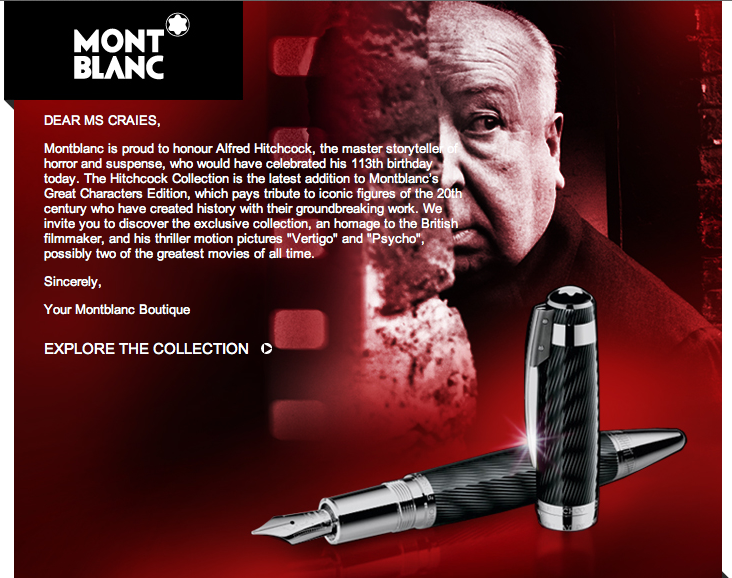
I just bought a pen, a beautiful pen and shared my email address with the supplier – top luxury brand, Mont Blanc.

A week later I got an email, beautifully crafted but inappropriate message.  This is not the way to say hello and welcome to your new customers.  Launching right in with a sales message…. How about a welcome, a short autoresponder about the brand and explanation setting out expectations for the relationship?

Online event PR – how to do it on a small budget

We’re working for a lovely creative client, Global Culture, who design t shirts and gifts with a New Zealand “kiwi humor” twist.

Global Culture NZ World Star Wars Day t shirt designs

Their designer, Russell came up with some fun Star Wars designs and we suggested promoting them around the May 4th, World Star Wars Day event.  [May the Fourth Be With You – in case you didn’t get the oblique reference.]

Here’s how we did it

  1. Create landing page on our website
  2. Amend Facebook to include a new page header; start liking and commenting on Star Wars associated sites
  3. Run a competition using the Wildfire app to promote winning free t shirts
  4. Tweet a competition to win free t shirts
  5. Set up Google Alerts for Star Wars Day and using these leads, comment on other people’s blogs and news items back to our site

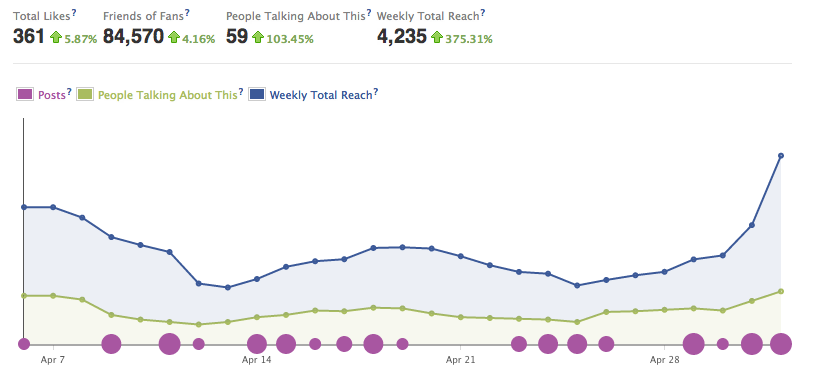
The stats go up to 2nd May – so there was more to come.

During the process we found a great blog post we found from UPrinting – Entrepreneurial lessons from Star Wars.   Worthy of your time for a quick read.

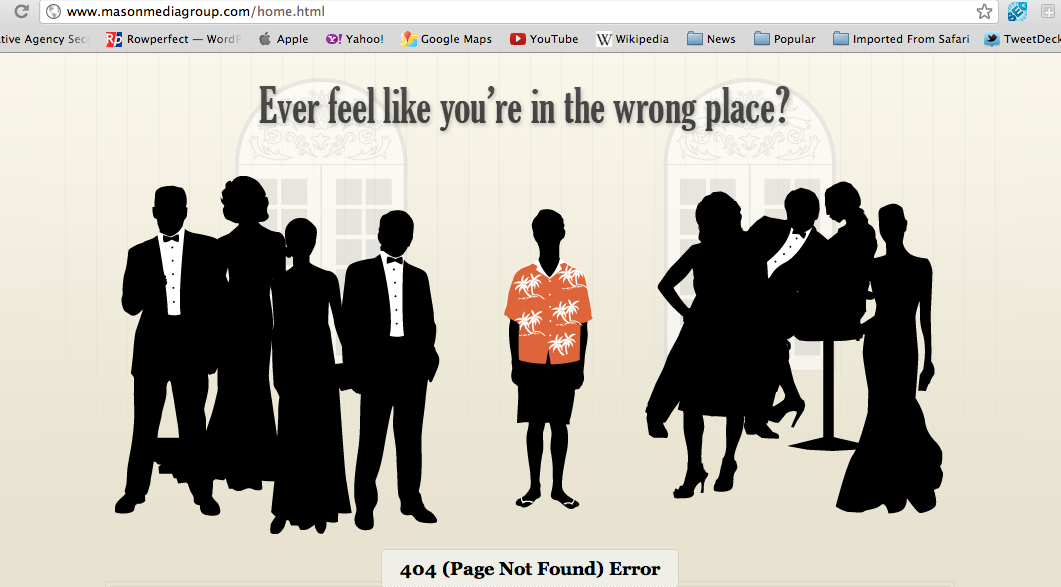
Another great Website Holding Page design

If you are redesigning your website or just taking it offline for a while, a bit of humour can help with your readers’ patience:

Enjoy this one

404 error page or holding page design

Pay-with-a-tweet: helpful content marketing tool

Are you a business that gives away your content free (as we do)?

Pay With a Tweet

Want to get some reciprocal publicity from your work?

Take a look at Pay with a Tweet from the creative folks at Innovative Thunder

We got a free download e book from Naked Marketing Manifesto

They got promoted using our twitter account

Symbiosis and ‘payback’ all in one!

Infographics used for business development

Former client, Ctrl-Shift, is a strategy consultancy focusing on personal data and its use online.

They realised that the landscape of personal data availability online has changed hugely in a very short time and despite hysterical outcries about Facebook privacy settings, it is an important area that both brands and consumers should be knowledgable about.

Their concept of “personal data stores” is a really interesting concept that is being built out – imagine you, the consumer, setting the ‘terms and conditions’ for a brand to access your personal information?

It’s called Vendor Relationship Management read more here and here.

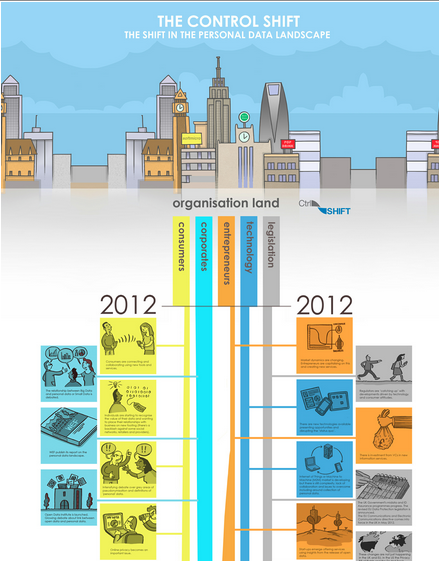
But see their great Personal Data infographic published in full with a brief snapshot below showing the 2012 situation…it describes the landscape for legislation, technology, entrepreneurs, corporates and consumers and looks forward in scenarios for each to 2017.

Ctrl-Shift the Personal Data Landscape future

Brand campaign brief template improvement

Rob Lane my colleague recently wrote a first draft of a new proposal for a client brand and I was delighted that he chose to insert a new section header,

“Your responsibilities”.

Imagine an agency telling a prospective client – not one we’re working with already – that they had to actively participate in delivering to make the marketing programme effective?

I love it.

Now I’m recommending we put this into all new client proposals. It’s authentic and transparent and gives the brand clear boundaries and guidelines that will help us give them exactly what they hired us to do.

What do you do in order to improve your client briefing and agreements?

Read our archive 

What does a modern creative brief look like?

Call our Rescue service for advice on crafting your perfect brief

Shout! Interview with Corey Eastman of Teehan + Lax

Corey Eastman is the new business director at top user experiencer agency, Teehan + Lax.  He approached us saying “your blog is on my daily RSS feed along with other agency sales blogs.  I try to stay up to date.”  And we were so flattered, we asked if he’d like to be interviewed.

Corey Eastman, Biz Dev Director

Creative – what does it mean to you?

The Agency of the Future to me is all about balancing the client agency relationship.  In the past it’s favored the client and the agency has been reactive.  Blair Enns I’ve met a few times and I’m very influenced by his philosophy.  I look back to what he talks about – agencies being specialized and focused using conversations rather than presentations and being selective about who you work with.

I found the Teehan+Lax philosophy on the company page of their site.

John Lax and Jeff Teehan are two super smart guys.  When we started out, we chose not to rely on the legacy of working models passed down from old agency world as the basis for our new company. Instead, we challenged the conventional formula and created a new approach and process. Even as we’ve grown in size and scale, we still are committed to:

  1. partners on every piece of business, from the first pitch through to the final deliverables;
  2. small, agile teams to make the most effective use of your budget;
  3. direct access to the people actually doing the work, so no more “broken telephone” or account managers promising things that can’t be delivered.

How did you get into new business development?

My background is competitive athletics – I played professional hockey which almost made competitive sales a natural transition for me.  I’m very driven and I have a strong passion for success.

What training would you recommend for anyone wanting a career in biz dev?

I think it’s all about communication and sharing stories and ideas.  Reading, writing, speaking, listening and body language / personality.  I did toastmasters and they are very good at honing speaking skills; get formal sales training and invest in a company that will invest in you – I did the IBM program; take ownership and read blogs; read books (Spin Selling is my favourite).

What has changed in new business techniques in the past few years?

Marketing and sales are converging – the reason I think is the internet.  It’s put the consumer in control.  The buy/sell process – which has become more digital.  We are moving from conducting business offline towards being mainly online.  John Lax always says “we have to create more value than you capture” quote from Tim O’Reilly.  Read more