
AI answers earn less and that’s our problem too
Most of the coverage of Alphabet’s results last week was about cloud growth and share prices. The line I keep coming back to was quieter.
Google’s Chief Business Officer said search revenue growth had slowed partly “because of the lower monetisation we were seeing in AI Mode.”
In plain English: Google’s AI answers make less money per search than its old results pages used to. And when Google has a revenue problem, we advertisers usually end up helping to ‘solve’ it.

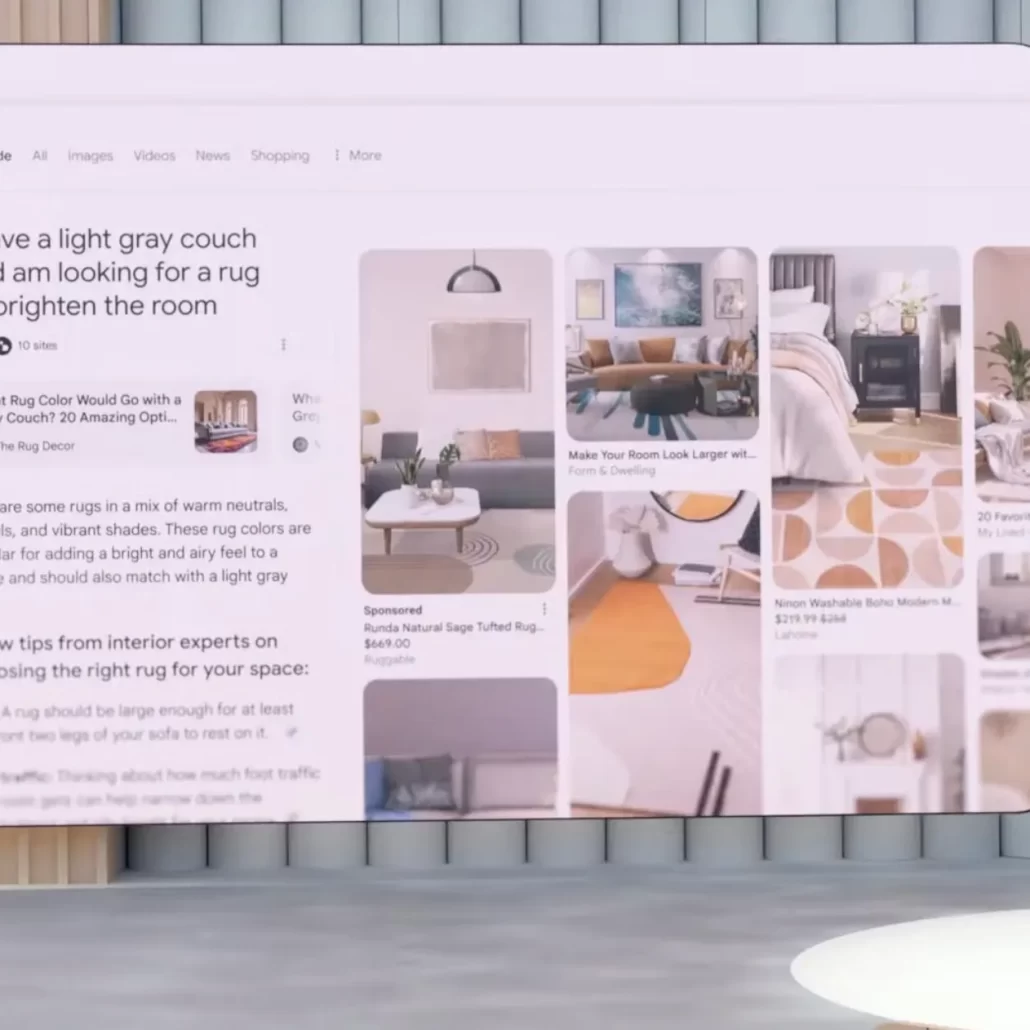
Google AI mode shopping adverts. Image Credit: TechCrunch
The monetisation gap
Let me be precise, because the headlines weren’t clear. Google’s search revenue didn’t fall. It grew 12% to $63.3 billion in the third quarter. But that growth rate was 19% in Q1 and 17% in Q2, while Google says search query growth is at a five-year high.
More searches, less money earned from advertising per search. A monetisation gap.
Some of the reason is how we all use AI Mode. We are becoming more conversational in our queries – they’re three times longer than a normal search. Plus we’re learning to use voice, images or documents within the search string. Google describes many of these as upper funnel: early research, or not “ready to buy”.
In B2B, that research stage is where buying committees form their shortlist. It is also the stage that tends to attract lower bids. Which is why knowing how your brand shows up in AI search across the whole customer buying journey is so critical.
This lands on B2B marketers’ desks
Three things make this our problem, not just Google’s.
Fewer clicks, everywhere. In early 2026, 68% of US Google searches ended without a click. In AI Mode, Semrush measured 93%. The answer is on Google’s page, so the visit never happens.
Being cited makes your ads work harder. Seer Interactive found brands cited in an AI Overview earned a 15.74% paid click-through rate on the same queries, against 11.19% when they weren’t. Organic AI visibility and paid performance are now one single customer conversation, not two budget lines.
The ads are arriving here. On 28 October Google started scaling ads in AI Mode to ten more countries, including New Zealand and Australia. In the US, ads now follow users into their follow-up questions. And SE Ranking found AI Mode ads appear far more often on expensive keywords: 24% of keywords under $2 a click, 54% at $10 and above. That is B2B territory.
Five questions I’m asking my paid media team
I’m not suggesting anyone pulls their budget. I am suggesting we know what it buys before Google rearranges the shop window.
-
How much of our search spend is research-stage, and how are we judging it? If it’s on last-click cost per lead, we’re measuring it against the wrong job.
-
Have we chosen to be in AI answers, or has automation chosen for us? Eligibility runs through broad match, AI Max and Performance Max. Google moved a lot of campaigns into AI Max in September. Check what changed, especially on brand campaigns.
-
What are we teaching the algorithm? If a job-seeker’s enquiry counts the same as a qualified prospect, Google’s AI will happily find you more job-seekers. Feed it pipeline stages, not form fills.
-
Do we know whether we’re cited in AI answers for our buyers’ real questions? If not, we can’t explain why our paid click-through rate moves.
-
Are we ready to test AI Mode ads here before the auction fills up? Early, contained tests are cheaper than catching up.
The real question
Google will close its monetisation gap. The only question is whether it closes it with our budgets, on its terms, before we’ve worked out what AI visibility is worth to our brands.
You already know that I work with CiteCompass who assess how your brand and product shows up across the buying journey in AI search. It’s a tool built for the needs B2B marketers have today.
So I’m curious: has you started treating AI visibility and paid search as one budget line? Or are they still different teams, with separate budgets and different metrics of success?